Best African Footballers Right Now: Who Leads the Pack
African talent shapes the modern game. Clubs across the Premier League, Serie A, and Ligue 1 now build tactics around African stars. Fans debate who ranks among the best African footballers today, and the answers shift with every season. This piece breaks down the current leaders by position, explains the criteria behind the rankings, and looks at a few names worth watching next.
What Makes a Player One of the Best Today
Rankings only mean something with clear criteria. Three factors matter most: club form, influence for the national team, and consistency over time. A single great tournament rarely secures a spot at the top.
Individual honors help too. The CAF Player of the Year award tracks who dominated the calendar year, based on club output and continental performances. Winning it signals sustained excellence, not a lucky run. Injuries, squad rotation, and tactical fit also shape where a player lands. A world-class talent stuck in a defensive system may put up modest numbers, while a lesser player in a free-flowing attack can look unstoppable. Context always matters. Coaches increasingly value versatility too, since players who adapt to multiple roles tend to stay in starting lineups longer than specialists who only fit one system.
Forwards Leading the Charge
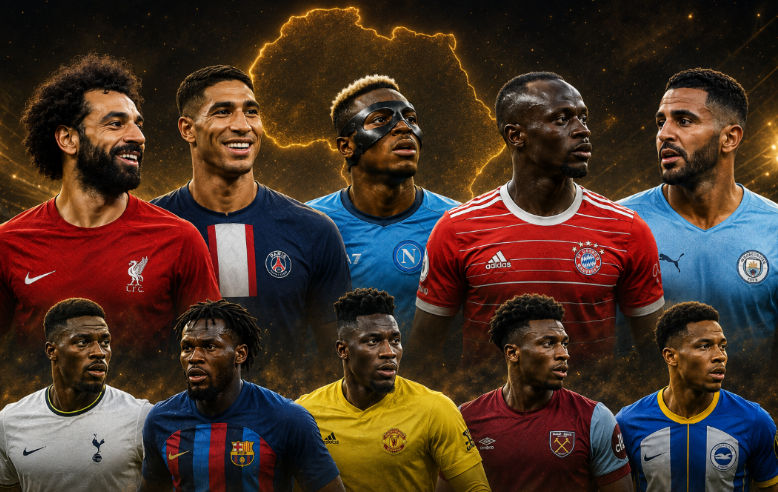
Attackers get the spotlight, and for good reason. Mohamed Salah remains the benchmark. At 33, he still produces elite numbers for Liverpool, often finishing seasons near the top of the assist and goal charts. His consistency across a decade sets him apart from flashier but less durable names.
Victor Osimhen brings a different profile. His movement and finishing make him one of the most feared strikers in Europe, and his club form regularly translates into results for Nigeria. Sadio Mane, now playing in Saudi Arabia, continues to deliver for Senegal, helping the team reach major finals while adding goals and assists at a high rate.
Younger forwards are closing the gap fast. Iliman Ndiaye has become one of the most dangerous wide players in the Premier League, combining speed with sharp decision-making. Bryan Mbeumo has followed a similar path, moving to Manchester United and quickly becoming a reliable source of goals and creativity in a demanding new environment. Official tournament data from CAF confirms how consistently African forwards now feature among the top scorers at continental and global competitions, a trend that keeps strengthening year over year.
Midfield Generals from Africa
Midfielders rarely get the same attention as strikers, but their influence runs deeper. Ismael Bennacer controls tempo for Algeria the way he once did for AC Milan during their title-winning run. His reading of the game and composure under pressure make him a stabilizing force.
Amad Diallo has grown into one of Ivory Coast’s most important players. His performances during recent AFCON standout players discussions put him firmly in that conversation, and his club form at Manchester United backs it up. He combines dribbling with defensive work rate, a rare mix at his age. His tournament form for Ivory Coast, capped by a player-of-the-tournament award, confirmed he belongs in any conversation about the continent’s top midfielders.
Younger midfielders like Lamine Camara are also pushing through. His progressive passing and stamina suit the demands of modern football, where midfielders must defend and attack in equal measure. Scouts across Europe now track Senegalese academies closely because of players like him.
Defensive Rocks and Goalkeepers
Defense often decides tournaments, and Africa’s current generation of top footballers from Africa includes several standout names at the back. These players combine physical strength with technical composure, a balance that separates good defenders from elite ones.
- Achraf Hakimi: a full-back who defends and attacks with equal quality, central to Morocco’s continued success and a strong contender for individual honors
- Edmond Tapsoba: a composed center-back known for aerial strength and clean ball progression in the Bundesliga
- Noussair Mazraoui: a versatile defender who adapts to multiple systems without losing defensive discipline
- Mbekezeli Mbokazi: a young South African center-back who impressed with committed, mistake-free defending on the world stage
- Edouard Mendy: an experienced goalkeeper whose shot-stopping and command of the box remain reliable at the highest level, even after a move to a less scrutinized league
Each name reflects a different strength, from raw pace to game intelligence. Together they show why African defenses no longer get overlooked in tactical discussions.
Rising African Talents to Watch
Beyond the established stars, a new wave of rising African talents is emerging fast. Bilal El Khannouss has already contributed nine goals and seven assists in a single season at club level, numbers that suggest a bright future. Ayyoub Bouaddi, still a teenager, has racked up nearly a hundred senior appearances for his club, a rare feat for someone his age. His decision to represent Morocco over France also reflects a broader trend of dual nationals choosing African federations.
Fans who follow these breakout performances often also follow sports betting markets tied to major tournaments, since young players can shift odds quickly once they prove themselves on the biggest stages. That crossover interest keeps growing as African football gains global visibility.
Mamadou Sangaré has also stood out in Ligue 1, drawing comparisons to more experienced compatriots. Development pipelines in Senegal, Morocco, and Nigeria now produce technically polished players earlier than before, thanks to academies that teach European tactical systems locally before any transfer abroad.
The Debate: Are These Rankings Always Fair?
Not everyone agrees with these lists, and that skepticism has merit. Rankings favor players at big clubs with strong media coverage, which can undervalue talent playing in less visible leagues. A brilliant season in a smaller league often gets less recognition than an average one at a giant club.
There’s also a timing problem. A player can peak during a World Cup or AFCON and get ranked highly for months afterward, even if club form drops off. Voters and pundits sometimes reward reputation over recent performance. A player who starred at one tournament can coast on that reputation for months, even after his club form cools off. This isn’t unique to African football, but it does affect how these rankings should be read. Treat any list as a snapshot, not a permanent hierarchy.
A Responsible Perspective on Football Rankings
Rankings are opinion backed by data, not certainty. Player form changes fast, and injuries or transfers can reshuffle any list within weeks. Readers who follow football closely, whether for fandom or for markets tied to the sport, should treat these rankings as one input among many, not a guarantee of future performance. Responsible engagement means checking multiple sources and staying aware that no ranking captures the full picture.
FAQ
Who is currently considered the best African footballer?
Mohamed Salah and Achraf Hakimi are frequently named at the top, based on sustained club form and major honors won in recent seasons.
How is CAF Player of the Year decided?
A panel considers club performance, national team impact, and honors won during the calendar year, with voting typically involving coaches, officials, and media representatives.
Which young African players are expected to break into the top ranks soon?
Bilal El Khannouss, Ayyoub Bouaddi, and Lamine Camara are among the names scouts and pundits mention most often as future stars.
Do African players dominate any specific league in Europe?
No single league dominates, but the Premier League, Ligue 1, and Serie A currently feature the highest concentration of prominent African stars.
Why do rankings of best African footballers change so often?
Form, injuries, and tournament performances shift quickly, so most credible rankings get updated multiple times per year to stay accurate.